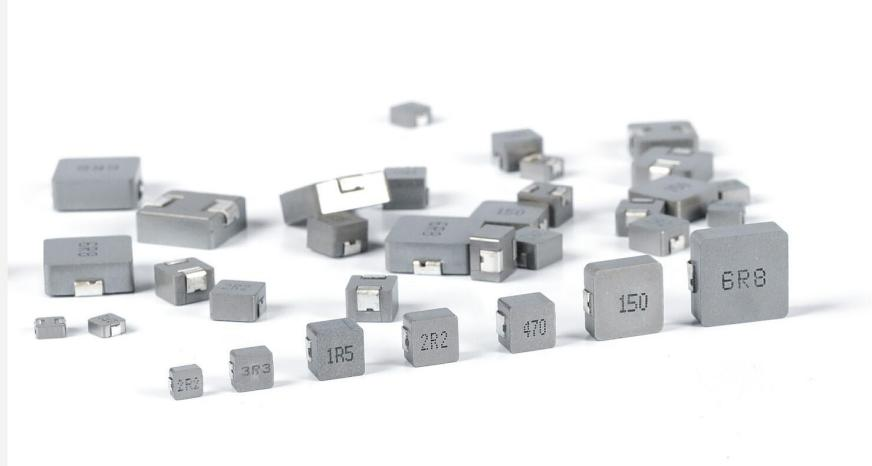
In recent years, with the acceleration of AI computing infrastructure construction and the continuous expansion of the new energy vehicle industry, market demand for integrally molded power inductors has been steadily rising. As core passive components in power management circuits, integrally molded inductors are achieving increasing penetration in mid-to-high-end application scenarios thanks to their fully shielded magnetic structure, low loss, and small size.
From the perspective of downstream demand, two major fields stand out as the most obvious drivers. First, the AI server sector: as CPU and GPU computing power increases, power supply modules are imposing higher requirements on the current-carrying capability and loss control of inductors. Traditional wire-wound inductors are gradually approaching bottlenecks in power density and heat dissipation performance, while integrally molded inductors can carry larger currents within the same package size while reducing DC resistance and improving power conversion efficiency, making them the mainstream choice for VRM circuits in high-end servers. Second, the new energy vehicle sector: the inductor usage in modules such as onboard OBCs, DC-DC converters, and BMS continues to increase with the electrification and intelligent upgrading of vehicles. Automotive-grade applications have stringent requirements for temperature adaptability, vibration resistance, and long-term reliability, and the mechanical strength and electrical stability of the integrally molded structure are better suited to complex automotive operating conditions.
On the supply side, the mid-to-high-end integrally molded inductor market has long been dominated by overseas and Taiwan-funded brands, with long lead times and high procurement costs being common pain points for downstream customers. As domestic manufacturers continue to invest in magnetic material formulations, automated molding processes, and reliability validation systems, product performance is gradually benchmarking against first-tier brands, while offering advantages such as short delivery cycles, fast custom response, and outstanding cost-effectiveness. The pace of domestic substitution is continuing to accelerate.